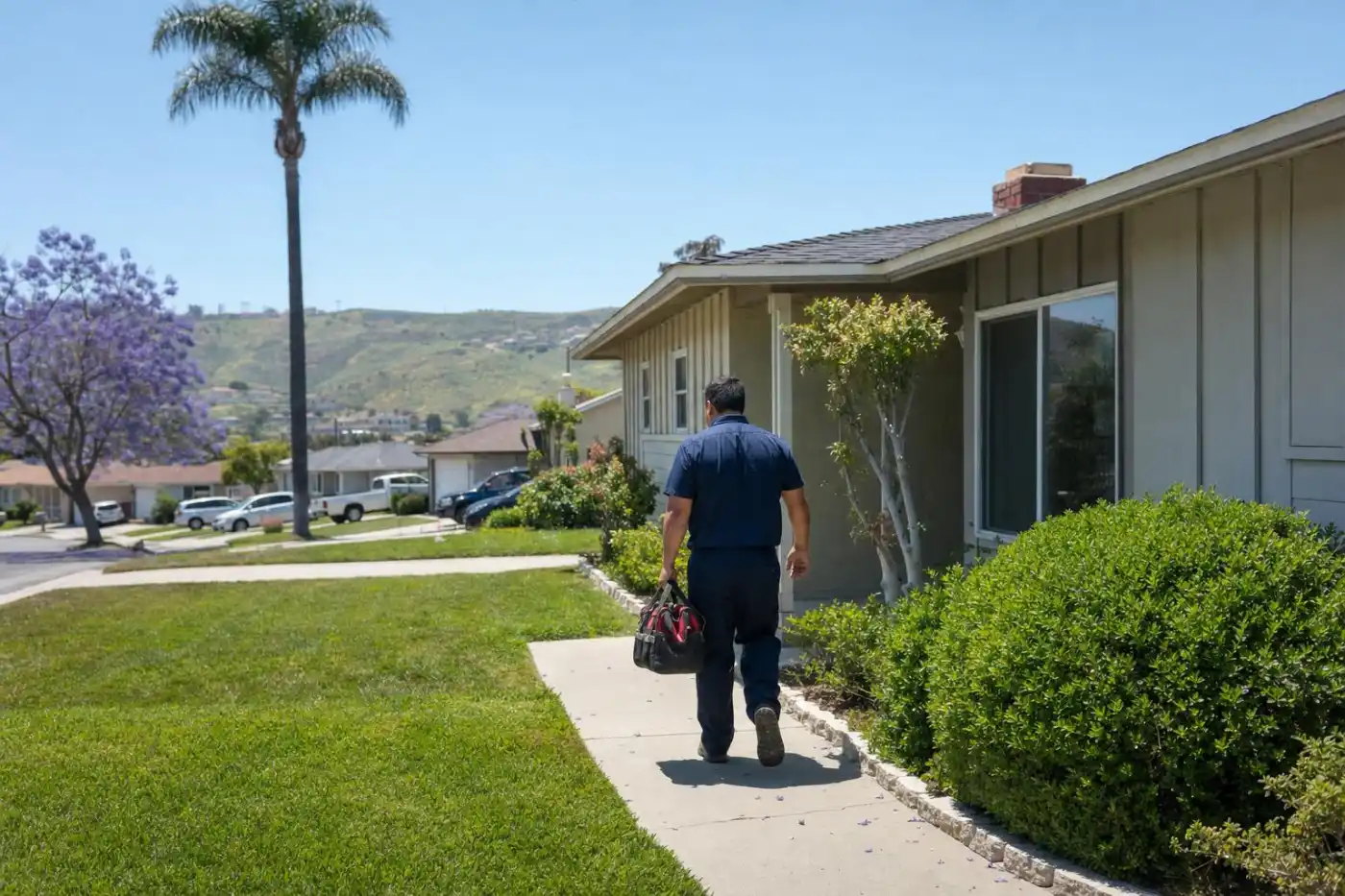
Torrance and nearby South Bay communities
Plumber in Torrance, CA
Leak, clog, no hot water or a sewer backup? Call or send a request to be connected with an independent Torrance plumbing contractor.
Plumbing problems in Torrance rarely pick a good time. The original water line in a 1950s ranch house finally springs a pinhole leak. The water heater in the garage starts weeping from the bottom of the tank. The kitchen drain backs up the night before guests arrive, or the tub gurgles every time someone flushes because roots have found the sewer lateral. Some of these are emergencies and some can wait a day, but each one raises the same questions: who should I call, and what is this going to cost?
Torrance Plumber Help keeps the first step simple. Call (424) 390-5879 or send a request, and it goes to an independent plumbing contractor who serves Torrance and the surrounding South Bay. The plumber contacts you, looks at the problem and gives you a price before any work begins. You decide whether to go ahead, and there is no charge for the referral.
Requests are welcome from Old Torrance, Walteria, Hollywood Riviera, North Torrance, the Del Amo area and every other part of the city, from homes on Torrance Municipal Water and homes on Cal Water, and from Redondo Beach, Gardena, Rancho Palos Verdes, Manhattan Beach, Hermosa Beach and Lomita. Single-family homes, condos, duplexes and apartment buildings all start the same way: one call or one form.
Torrance Plumber Help is an independent referral service, not a plumbing company. It does not employ plumbers, own trucks or sell water heaters. When you call or send a request, it is passed to an independent, third-party plumbing contractor who serves Torrance. That contractor contacts you, looks at the problem, sets the price, schedules the work, handles any permit and backs the job with their own warranty and terms.
Using this site costs you nothing. You pay only the plumber, and only if you approve the work they quote. Callbacks and on-site availability vary.
More about us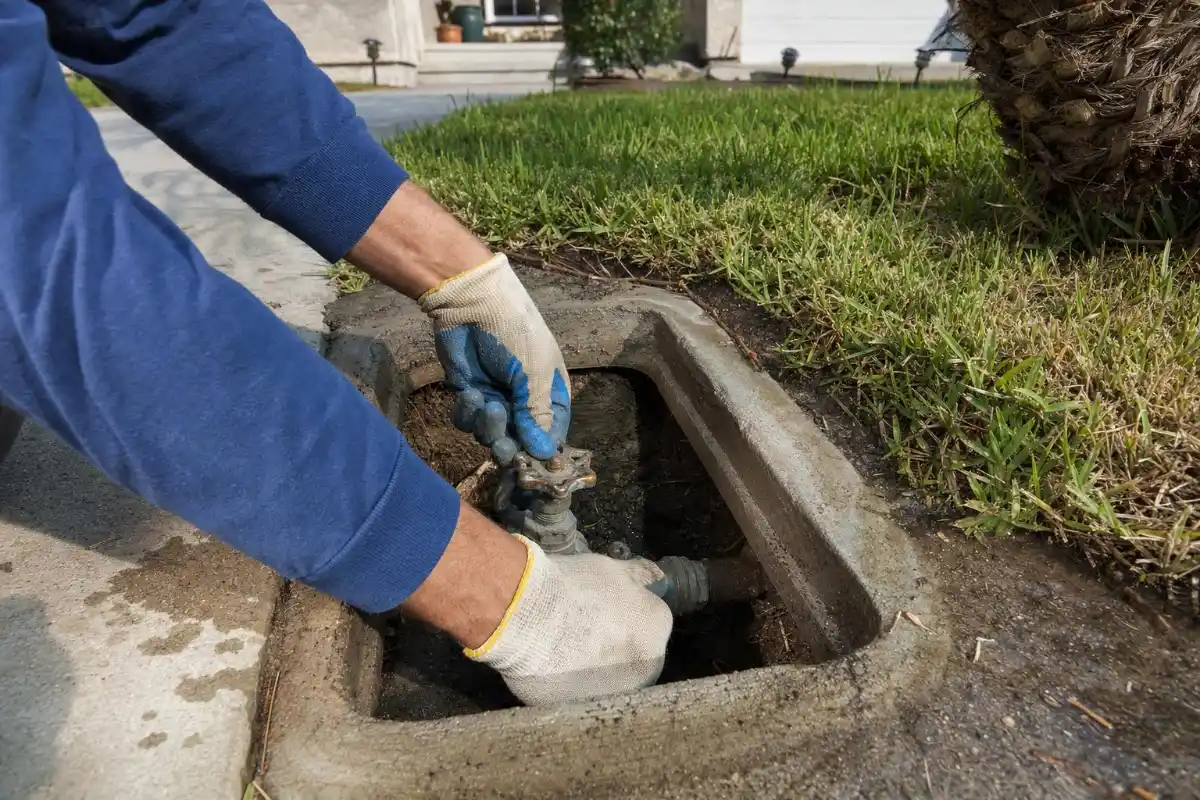
Most Torrance plumbing calls come down to five kinds of work: urgent problems that cannot wait, clogged drains, water heaters, the sewer lateral that runs from the house to the city main, and leaks you can see or only suspect. Each service page below covers the warning signs, how the work is usually done in plain terms, typical costs with their sources, the California and City of Torrance rules that apply and the questions worth asking before you agree to a price.
Requests are welcome from across Torrance and from nearby South Bay communities. Redondo Beach, Gardena, Rancho Palos Verdes, Manhattan Beach, Hermosa Beach and Lomita each have their own page covering the water, sewer, housing and permit details that set them apart. Requests from Palos Verdes Estates, Rolling Hills Estates, Harbor City and West Carson are handled the same way. Coverage is always confirmed by address when the plumber follows up.
See all service areas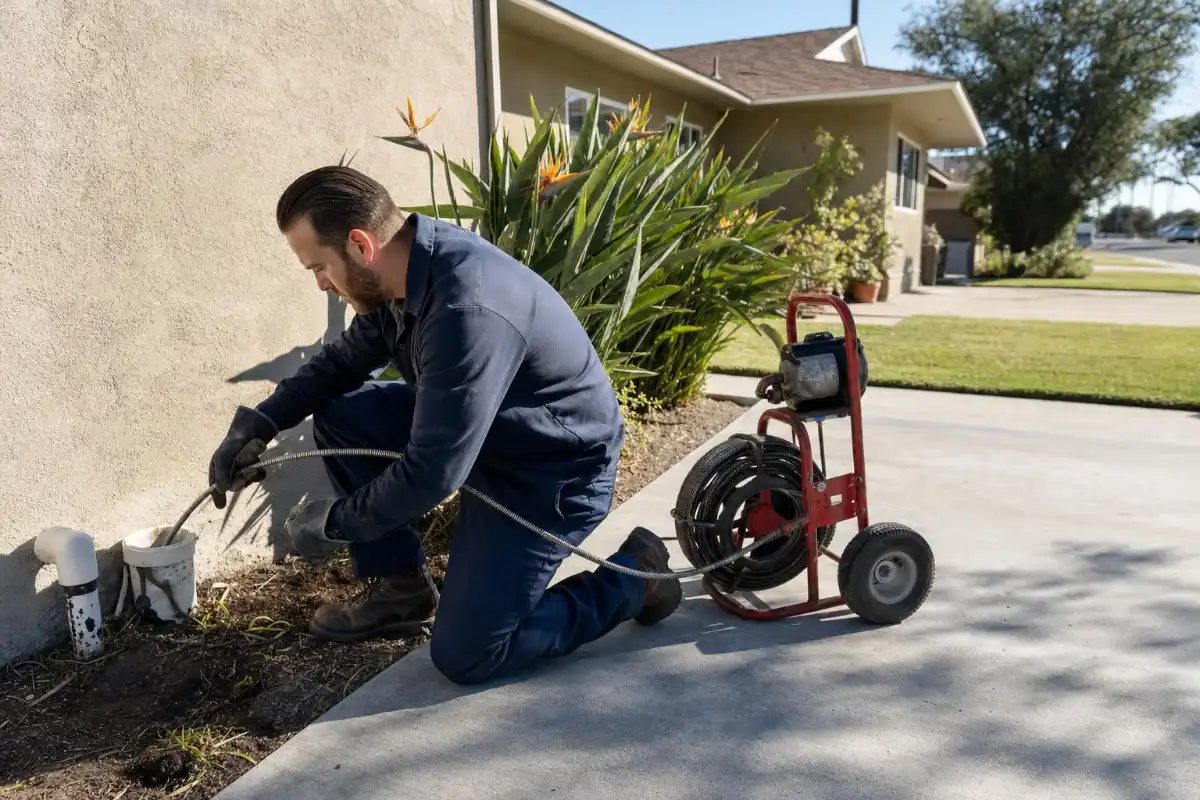
Your request goes to an independent plumbing contractor who works in Torrance and nearby South Bay communities.
Ask for the price, or at least the service call fee and hourly rate, before anyone starts.
California licenses plumbing contractors through the CSLB, and you can look up any license online.
Using this site is free. You pay the plumber only for work you approve.
The plumber you are connected with sets their own prices, so every figure here is a guide, not a quote. "Plumbing" covers everything from a dripping faucet to a new sewer lateral, so prices spread wide. Read these as several sources side by side, not one true Torrance price.
Los Angeles figures (Angi; the pages do not date their data; read November 2026):
Figures not tied to Los Angeles: HomeGuide's emergency plumber guide (undated) puts after-hours weekday rates at $120 to $300 an hour, weekends at $150 to $350 and holidays at $200 to $450 or more. HomeAdvisor's clogged drain guide (labeled 2025) puts drain clearing at an average of $241, with a normal range of $147 to $345, and its slab leak guide puts leak detection at an average of $280. HomeAdvisor and Angi share one cost database, so count them as one source.
Torrance permit fees are a small part of the bill. The city's plumbing permit form for July 1, 2024 to June 30, 2025 lists $29.40 for a water heater and $73.50 to alter or repair an existing building sewer, plus issuing and other fees. Fees for the current year may differ. Angi's Los Angeles sewer page also lists permit and engineering figures that appear to be City of Los Angeles items, so they are left off here.
What moves the price: when the work happens, how hard the pipe is to reach (behind plaster, under a slab, no cleanout), the pipe material, how long and deep any sewer work runs, whether it crosses into the street, trenchless lining versus an open trench, tank versus tankless and gas versus electric, strapping and connector upgrades, and permit fees. Ask for the price, or the service call fee and hourly rate, in writing before work starts.
Two water providers serve Torrance, and it matters when you need to report a leak in the street or read a water quality report.
About three quarters of Torrance gets water from Torrance Municipal Water and the rest from Cal Water. Your water bill shows which one serves you.
A water main break is the utility's job, not a plumber's. The city says Torrance Municipal Water responds to emergencies "7 day 24 hour," and that after-hours water main breaks in its area go to Torrance Fire Department Dispatch, (310) 781-7042 (city water services). Cal Water customers should call the number on their Cal Water bill. If the leak is on your side of the meter, in the yard or inside the house, that is plumbing work: California's C-36 plumbing license covers "Water and gas piping from the property owner's side of the utility meter," per the CSLB.
Hard water carries dissolved minerals that leave scale in water heaters, faucet aerators, showerheads and tankless heat exchangers over time. How hard yours is depends on your provider.
Part of the reason the city leans on imported water is the coast: the city's 2009 General Plan environmental report said Torrance could not fully use its groundwater right "because of seawater intrusion," and the city now runs a groundwater desalination project.
What it means in practice: a tank water heater collects sediment in the bottom, which can cause rumbling and shorten its life, and a tankless unit can scale up inside. Ask the plumber whether periodic flushing or descaling makes sense for your heater, and whether water treatment equipment is worth considering.
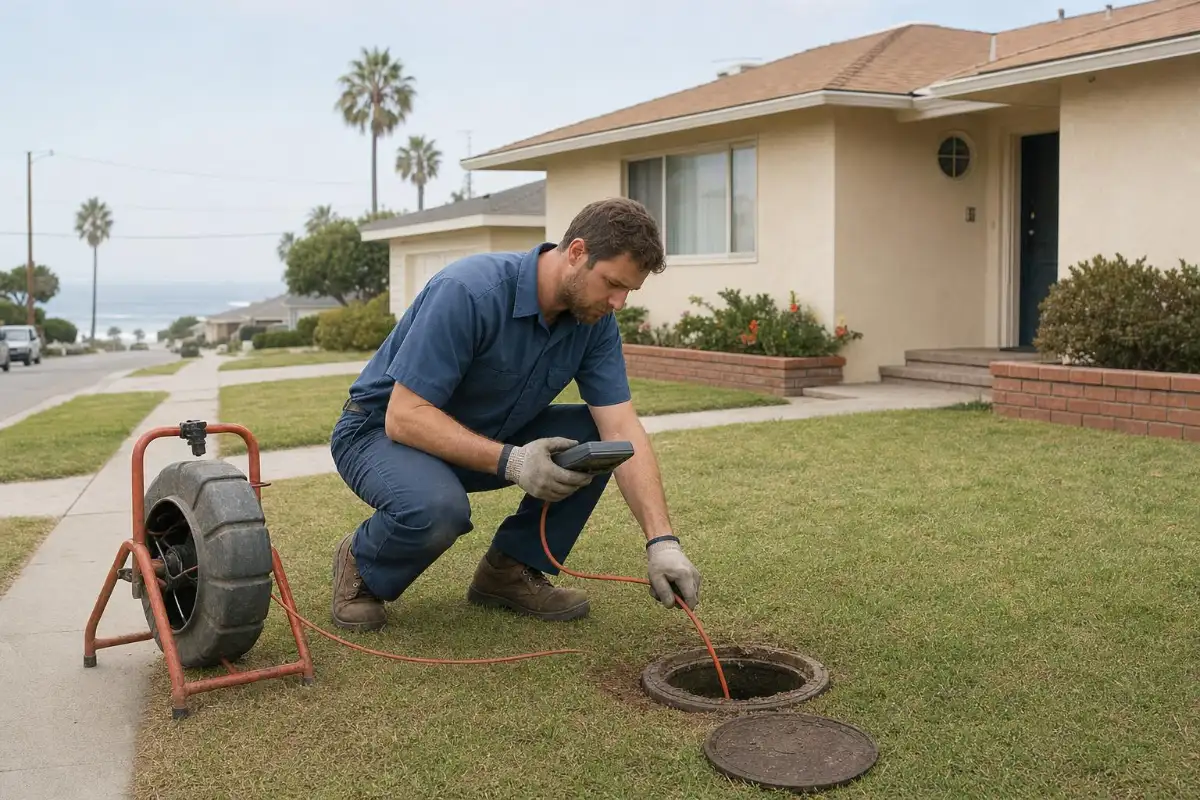
Three layers of pipe carry wastewater away from a Torrance home, and each has a different owner.
Lateral work takes up to two city permits. Per the same lateral policy, work on private property, from the building to the property line, needs a Plumbing Permit ("Alter Building Sewer"). Work in the public right-of-way, from the property line to the main, needs a Construction and Excavation Permit. A job that crosses both needs both. If you are not sure whether a backup is in your lateral or the city main, a plumber's camera is how you find out.
Plumbing advice written for cold places does not fit Torrance. NOAA's 1991 to 2020 normals for the Torrance Airport station show coldest average lows of 46.3 degrees in December, 47.0 in January and 47.6 in February, and warmest average highs of 78.1 degrees in August and September. The station averages about half a night a year at or below 32 degrees, by our sum of NOAA's monthly figures.
Rain falls mostly in winter: about 3.36 inches in January, 3.66 in February, 1.98 in March and 2.24 in December, and 0.09 inches or less a month from June through September, or about 13.6 inches a year by our sum.
So when a pipe fails in Torrance, cold is rarely the reason. Age, corrosion, water pressure, hard water scale, a failed fitting, tree roots or an earthquake are the usual suspects. The winter rain months are when a cracked or root-filled sewer lateral is most likely to show itself, and the long dry season is when tree roots go looking for moisture in old sewer joints.
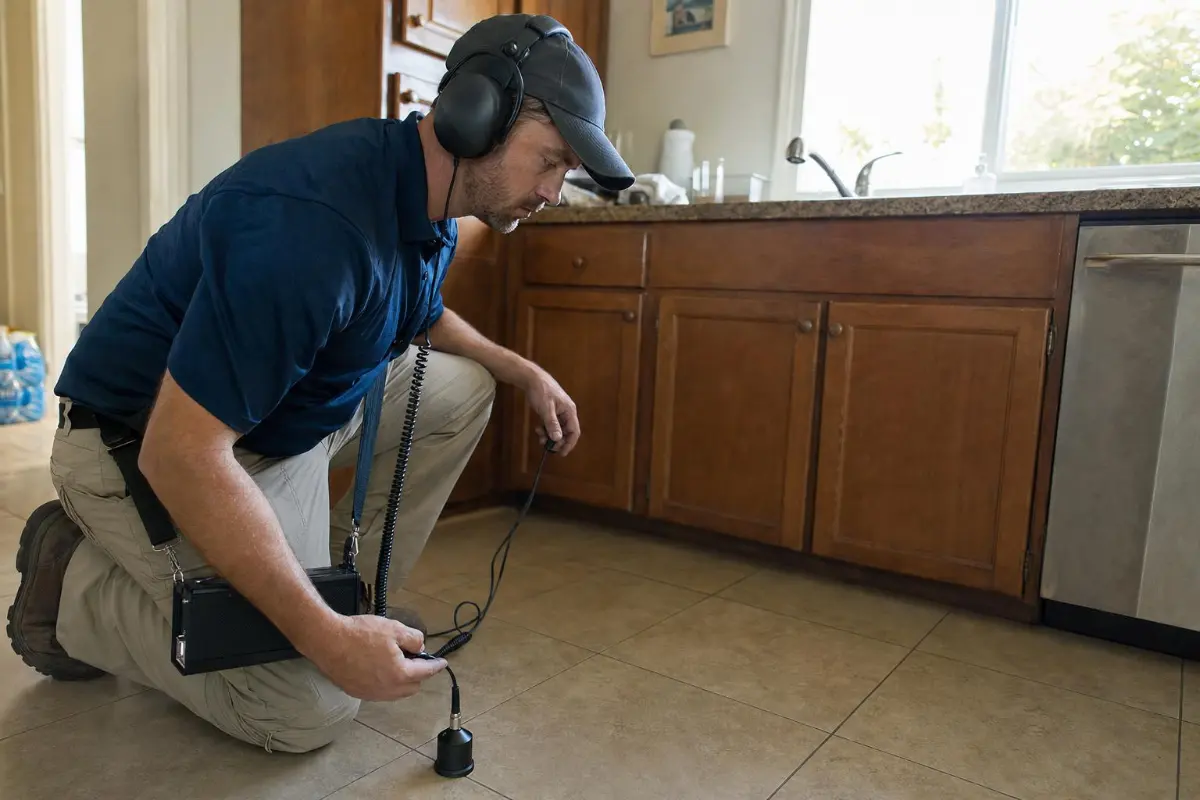
Torrance's housing is mostly mid-century. The Southern California Association of Governments' housing data for Torrance (April 2021, from the 2014 to 2018 American Community Survey) shows homes by year built:
By our math from that table, about 60 percent of Torrance homes were built in the 1950s and 1960s alone, compared with about 30 percent across the SCAG region, and about 82 percent were built before 1980. Only about 9 percent were built since 1990. Census Reporter, summarizing the 2024 American Community Survey, counts 139,568 residents in 56,540 housing units, with a median owner home value of $1,105,900.
What that means for pipes, as general plumbing knowledge rather than a Torrance count: homes from that era were often built with galvanized steel or early copper supply lines and cast iron or clay drain and sewer pipe, which corrode, scale or let in roots as they age. A city where six in ten homes date from 1950 to 1969 is at the age when original water lines, drain lines and sewer laterals start to fail. Signs of tired supply pipe include low pressure at several fixtures, rusty water, repeated pinhole leaks and fittings that weep. When leaks keep showing up in the same kind of pipe, ask the plumber whether repiping a section or the whole house makes more sense than another spot repair. Replacing concealed pipe is permit work, so ask who will pull the permit.
Torrance Municipal Water's 2025 water quality report says water systems had to finish a service line inventory by October 16, 2024, and points to the city's lead service line inventory page, which links an online map and a self-certification form. In 2024 tap sampling at 200 sites, lead at the 90th percentile was not detected and none of the 200 samples was over the 15 parts per billion action level. Copper at the 90th percentile was 0.17 parts per million, with none over its action level.
Cal Water, which serves the rest of the city, says in its 2025 Hermosa-Redondo and Dominguez reports: "We have no known lead service lines in our systems."
Statewide, California's State Water Resources Control Board reported in February 2026 "no lead reported in nearly 10 million service connections," with about 600,000 lines, roughly 6 percent, still of unknown material. The inventory covers service lines, not the pipes, solder and fixtures inside your home, and the Water Board suggests checking fixtures and interior piping, "especially if installed before 2010." If you have questions about older faucets or interior pipe, a plumber can look at what is in the walls and under the sinks.
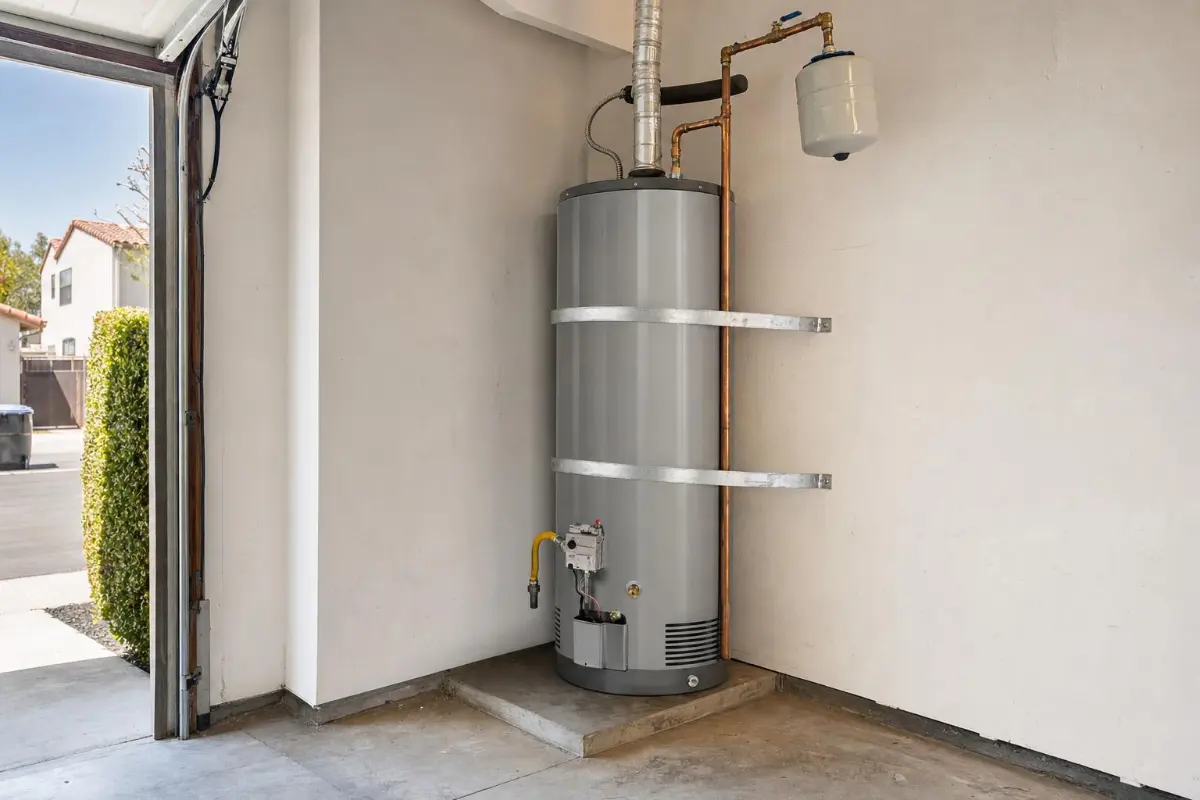
California law requires every residential water heater to be secured against earthquakes. Health and Safety Code 19211 (Justia reprint) says new, replacement and existing residential water heaters "shall be braced, anchored, or strapped to resist falling or horizontal displacement," installed at least to the California Plumbing Code. It applies to tank heaters up to 120 gallons where a pre-engineered kit exists, and home sellers must certify compliance to buyers in writing.
Torrance's own plan check correction sheets tell builders to "Strap the water heater at upper and lower 1/3 of vertical height," with the lower strap 4 inches above the controls, citing California Plumbing Code section 507.2. Those sheets are written for plan-checked projects such as additions and remodels, but the strapping rule is the same one every heater has to meet.
The Division of the State Architect's strapping guidelines explain what that looks like:
SoCalGas gives the same two-point advice, the upper and lower one-third of the tank, and says to replace semi-rigid aluminum or copper gas connectors with approved flexible ones. The Earthquake Country Alliance adds that the tank should sit within 2 inches of the wall, with a wood block fastened to the studs if the gap is wider. If your heater is not strapped, a plumber can add straps on a service visit, and any new heater should be strapped as part of the install.
Inside city limits, plumbing permits come from the City of Torrance Community Development Department, Building and Safety Division. Plumbing is its own trade permit: "Separate permit applications and submittals are required for trade permits," per the city's permit page. The Permit Center is at 3031 Torrance Blvd., with in-person visits by online appointment.
Everything is filed online now. The city's online permit portal page says that "Effective January 5, 2026, all plan reviews and permit submittals must be submitted electronically" through the Citizen Access Portal, which runs on Accela and needs an Accela Citizen account, and that "Paper plans and physical submittals will no longer be accepted after this date." Where a project needs it, a Zoning Clearance from Planning or the Environmental Division comes first.
The code in force. Torrance Municipal Code Section 83.1.1 adopts the "California Plumbing Code, 2025 Edition" with local amendments (city code). The city deletes the code's fee table and sets its own fees, and it amends the list of building sewer materials, allowing Schedule 40 ABS, Schedule 40 PVC and PVC SDR35 among others.
Water heaters are permit items. The city's plumbing permit form lists a water heater fee ($29.40 for July 2024 to June 2025), so a water heater swap is permit work. The same form says an owner-builder must require subcontractors to hold a current Torrance Business License. For additions and alterations, the city's correction sheets say homes built before 1994 must comply with the state's SB 407 plumbing replacement law, which calls for water-conserving fixtures.
Ask the plumber whether your job needs a permit and who will pull it, and check that the final inspection passed before you make the last payment.
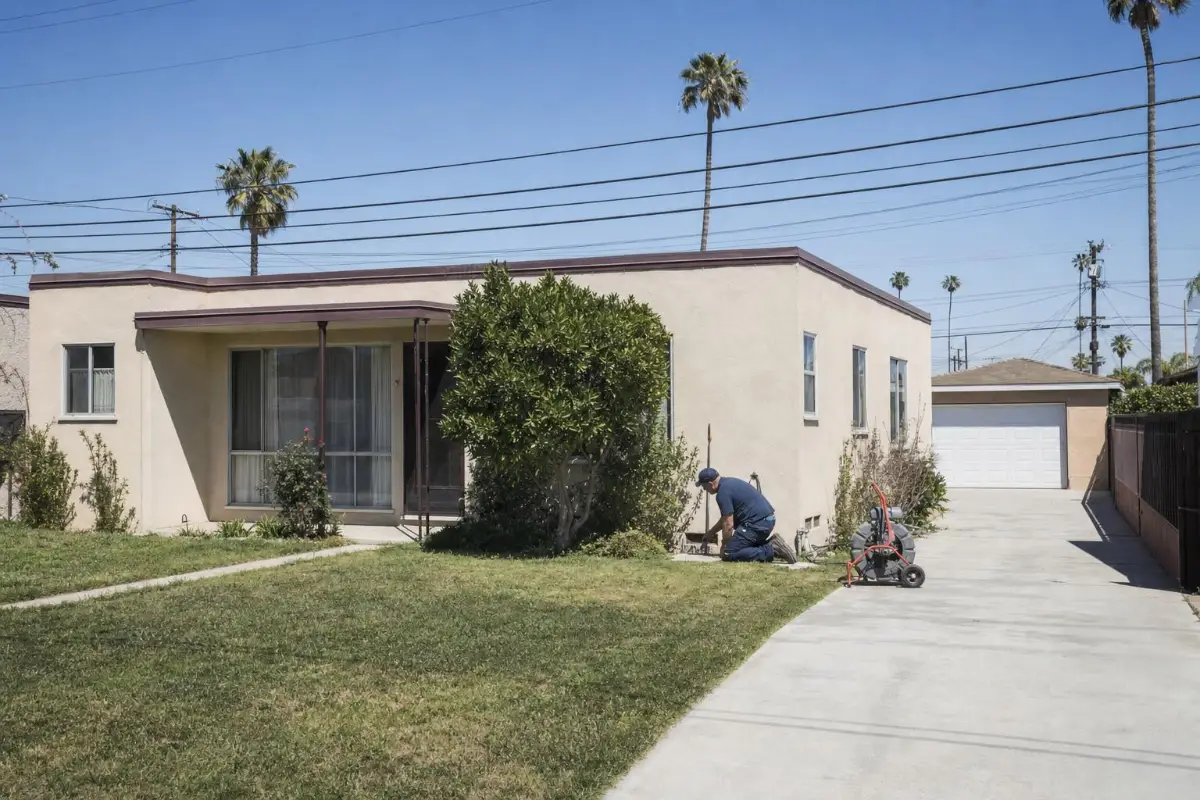
A Torrance mailing address does not always mean the City of Torrance issues the permit.
Most Torrance addresses are inside the City of Torrance. The plumber confirms which office applies when they follow up.
California licenses plumbing contractors through the Contractors State License Board. The C-36 Plumbing Contractor class covers work that "provides a means for a supply of safe water, ample in volume and of suitable temperature" and "the proper disposal of fluid waste," including gas piping and appliances, "Installation of any type of equipment to heat water, or fluids," and "Water and gas piping from the property owner's side of the utility meter."
The $1,000 rule. "Any contractor performing work of $1,000 or more (combined labor and material costs) must be licensed by CSLB," says the CSLB's consumer brochure. AB 2622 raised the old limit to $1,000 starting January 1, 2025, and the exemption applies only when the job needs no building permit and the unlicensed person hires no workers; ads for such work "must state the person is not licensed," per the CSLB's announcement. Torrance charges a plumbing permit fee for a water heater, so a water heater replacement falls outside the exemption at any price.
Down payments. The same brochure says to "Pay no more than 10% down or $1,000, whichever is less." Ask for the license number and look it up on the CSLB's website, cslb.ca.gov, before you sign.
Torrance is a mix of owners and renters. SCAG's housing data shows 55.3 percent of households own and 44.7 percent rent, compared with 52.5 percent owners across the region. By housing type (California Department of Finance, 2020), 52.5 percent of the city's 58,591 homes are single-family detached, 6.3 percent attached, 6.3 percent in buildings of 2 to 4 units, 33.1 percent in buildings of 5 or more and 1.9 percent mobile homes.
That shapes how plumbing problems get solved. In an apartment or condo building, one kitchen stack or sewer lateral can serve several units, so a clog or leak in one unit may start somewhere else. If you rent, tell your landlord or property manager first, since they usually arrange the repair and choose the plumber; check your lease. If you own a house, remember that Torrance makes the property owner responsible for the lateral all the way to the connection at the city main. If you own or manage a duplex, fourplex or larger building, requests are welcome for common lines, water heaters serving several units, laterals and leaks between floors. Say how many units are affected when you call or send a request.
Whether you use this site or call around yourself, these questions sort plumbers quickly.
Keep the down payment to no more than 10 percent or $1,000, whichever is less, as the CSLB advises.
Torrance Plumber Help cannot help with a gas leak, and neither should any plumber you call first. SoCalGas, the gas utility, gives these steps for a suspected leak:
SoCalGas also says not to turn off your meter "unless you smell natural gas, hear the sound of gas escaping or see other signs of a leak," and only if it is safe, using "a 12-inch or larger adjustable wrench" and turning the valve "1/4 turn in either direction, until the valve is crosswise to the pipe." "Do not turn it back on yourself." After an earthquake the same rule holds, and only SoCalGas field staff reopen the meter, per its emergency preparedness page. Once the utility or the fire department has made the house safe, a licensed plumber can repair gas piping to an appliance, which is permit work.
Sewer lateral and water line replacements often mean digging in the yard, the driveway or the parkway. SoCalGas's safety insert says to contact 811 "at least two business days before digging, not including the date of notification," and to wait for utilities to mark their lines. Use hand tools only within 24 inches, plus half the line's size, of a marked line, and know that a ticket lasts 28 days. On a sewer or water line job, ask the plumber who is calling 811 and when the marks will be in place. In Torrance, sewer work past your property line also needs the city's Construction and Excavation Permit, so ask about that at the same time.
1. Call (424) 390-5879 or send the form. Describe the problem, how urgent it is and where you are. 2. A plumber follows up. An independent plumbing contractor who serves Torrance contacts you to set a time. Callbacks and on-site availability vary. 3. Diagnosis. The plumber looks at the problem and explains the cause. Ask up front about any service call or diagnostic fee. 4. Written price. You get a price for the repair before work starts. For bigger jobs, ask what is included and what could change it. 5. Permit and repair. If the work needs a permit, the plumber files it through the city's online portal and does the work. 6. Inspection and final payment. Where a permit was pulled, check that the final inspection passed before paying in full.
You decide at every step. Nothing is done without your approval, and there is no charge for the referral.
Requests are welcome from every part of Torrance, including:
Across the city, about 60 percent of homes were built in the 1950s and 1960s, by our math from SCAG's housing data, so many supply lines, water heaters and sewer laterals have some age on them. Requests are also welcome from every other Torrance neighborhood. Mention your neighborhood, cross streets or ZIP code when you call or send a request.
The same referral process covers homes outside city limits. The city's General Plan environmental report places Redondo Beach to the west, Gardena to the north and Palos Verdes Estates and Rolling Hills Estates to the south.
Permit rules differ by city and county, so the plumber confirms which office applies when they follow up. Coverage is confirmed by address.
Torrance Plumber Help does not handle insurance claims and cannot tell you what your policy covers. Sewer backups, slab leaks and slow leaks are each treated differently by different policies, and a renter's policy and the building owner's policy cover different things. Read your policy and call your agent or insurer before you assume either way. Take dated photos of any damage, keep receipts and save the plumber's written description of the cause. If you are selling a home, remember that California requires sellers to certify in writing that the water heater is strapped.
Torrance Plumber Help does not do the plumber work itself. When you call or send the form, we pass your request to an independent local contractor who covers your part of Los Angeles County. That contractor contacts you, gives you the estimate and does the work.
See what happens after you callNo. Torrance Plumber Help is an independent referral service, not a plumbing company. Your request goes to an independent plumbing contractor who serves Torrance. That plumber looks at the problem, sets the price, does the work and provides any warranty under their own terms.
No. The referral is free. You pay only the plumber, and only for work you approve after hearing the price.
It depends on the job and the time of day. Angi's Los Angeles page (undated) puts a typical plumber visit at $193 to $600, with a service call of $100 to $250 and after-hours calls at 1.5 to 2 times the standard rate. The plumber sets the price.
It depends on the plumber's schedule. Callbacks and on-site availability vary. Say clearly whether water is running, the sewer is backing up or you have no hot water, so the plumber knows how urgent it is.
You are. The City of Torrance says property owners are responsible for maintaining and repairing their sewer lateral, including the entire pipe on private property and the connection point to the city sewer. Work from the house to the property line needs a city plumbing permit, and work in the street needs a Construction and Excavation Permit.
Leave the building, get everyone out, do not touch light switches, and call SoCalGas from a safe location outside, or 911 if there is danger to life or property, as SoCalGas's safety guidance says. Do not call this site or a plumber first.
Tell us what is going on with your plumbing and get connected with an independent Torrance plumbing contractor.
Free — no obligations